
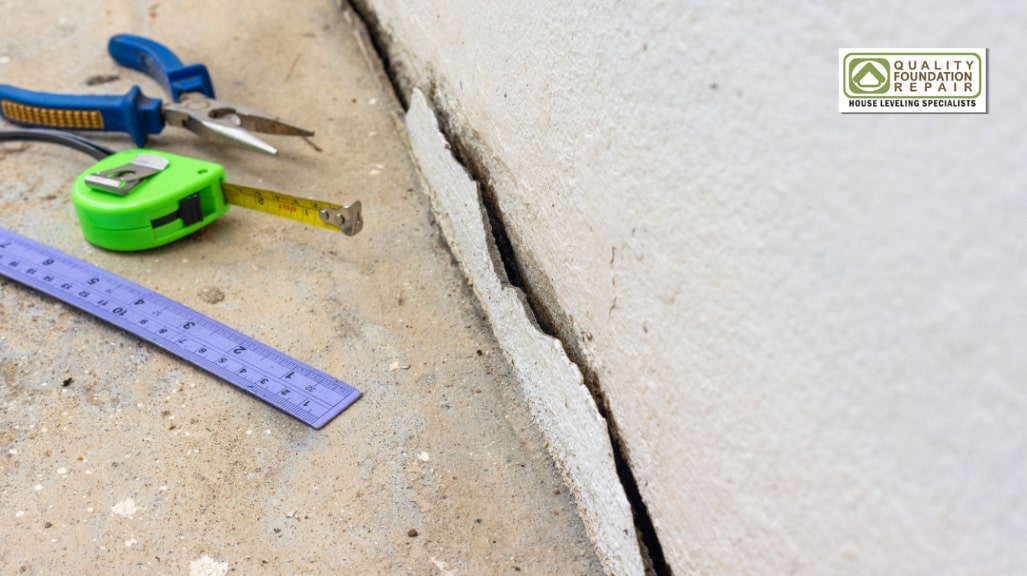
Seeing foundation cracks can be alarming for homeowners. Are they normal, or a sign of something more serious? The answer depends on the type and severity of the crack. In this article, we'll discuss what causes foundation cracks, how to identify them, and what you can do to repair them.
What Are Foundation Cracks?
Foundation cracks are fractures or splits in a home's foundation that may pose a risk to its structural integrity. They can develop for various reasons and vary in size, shape, and severity. Cracks are common; in fact, nearly all homes have some. But not all cracks are equal. Some are minor and can be repaired simply, while others require more extensive foundation repairs.
What Causes Foundation Cracks?
Poor Drainage
Water is one of the biggest causes of structural problems. Water flows to the lowest point, and the foundation is the lowest point of a home. Missing gutters or downspouts, clogged drains, poor grading, and leaky pipes can all cause water to pool around the foundation. That pooling builds hydrostatic pressure, the force exerted by the weight of water, which increases with depth. Strong enough pressure can crack foundation walls and, in extreme cases, cause them to lean or bow inward.
Climate
As temperatures rise and fall, most materials expand and contract, creating stress within the foundation that can cause it to crack over time. Floods and heavy rainfall cause water problems, and winter can cause frost heave, where water expands when frozen.
Poor Construction Practices
Inadequately constructed foundations lead to structural issues. Foundations lacking proper steel reinforcement are more susceptible to cracking under stress, and inferior concrete or improper curing also results in a weaker foundation.
Soil Conditions
The soil your foundation is built on affects its stability. Expansive soils, like clay, change significantly in volume with moisture content, expanding when they absorb water and contracting when they dry out. Higher soil reactivity increases the likelihood of movement in the home's footings. When soil beneath a foundation isn't properly compacted before construction, it can settle unevenly once the structure is built, causing cracks.
Large Trees and Vegetation
Tree roots can pressure the foundation as they grow, and vegetation absorbs water from the soil, leading to shrinkage. These fluctuations can cause the foundation to settle unevenly and develop cracks.
Seismic Activity
Ground shaking during an earthquake stresses the foundation, potentially leading to cracks or structural failure.
Types of Foundation Cracks
- Vertical cracks run straight up and down or slightly diagonal, often from concrete shrinkage, settling, or minor ground movement. Usually less severe, but monitor them for widening or lengthening.
- Horizontal cracks run parallel to the ground and are typically caused by soil pressure against the foundation walls or differential settlement. These are more serious and can indicate significant structural issues.
- Diagonal cracks run at an angle and are often wider at one end, usually from uneven settling. They can be serious if they widen and should be assessed by a professional.
- Stair-step cracks resemble a staircase and often appear in brick or concrete block foundations from differential settling, especially at corners or load-bearing points. This is a sign of a serious foundation problem.
- Shrinkage cracks are thin, hairline cracks that appear shortly after pouring concrete, usually from rapid drying or improper curing. Usually not a concern, but worth monitoring.
How to Repair Serious Foundation Cracks
Serious foundation cracks require professional repair. Don't try to DIY your way out of it. Professionals may recommend the following methods:
- Pier Installation: Stabilizing and lifting sinking or settling foundations using steel push piers. Quality Foundation Repair Austin drives its in-house steel push piers deep into stable soil beneath the foundation, then uses hydraulic jacks to lift and stabilize it toward its maximum practical level. This is ideal for addressing severe settling or sinking.
- Carbon Fiber Straps: Reinforcing and stabilizing walls with minor to moderate cracks by applying a strong epoxy adhesive and securing carbon fiber straps over the cracks, which helps prevent further cracking.
- Wall Anchors: A technique used to stabilize and straighten bowing walls. Metal anchors are installed in the soil outside the foundation, and steel rods are connected through the wall and tightened gradually to pull it back into place.
- Grouting and Slab Lifting: Injecting material beneath the foundation to fill voids and lift settled areas. A grout or polyurethane foam mixture is pumped through small drilled holes to fill voids, stabilize the foundation, and raise the slab toward its maximum practical level. This addresses minor to moderate settling.
Contact the Foundation Pros
Have you noticed cracks in your home's foundation? We offer free estimates on all of our services, including foundation repair, so you can get an idea before making any decisions. Contact us today for more information about our foundation repair services.