
Stair Step Cracks
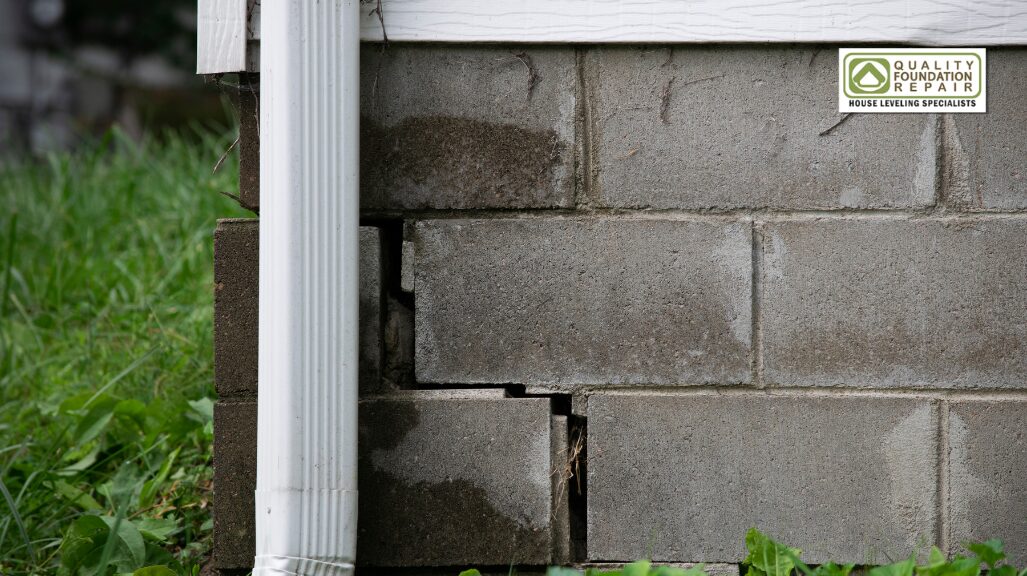
Cracks in a stair-step pattern along brick or block walls indicate foundation movement, commonly from settlement or soil pressure.
 Locally owned & operated
Stair Step Cracks is one of the clearest signs Central Texas homeowners notice when a foundation is on the move. In Central Texas, the cause is usually one of two things: expansive Blackland clay swelling and shrinking under the home with every wet-dry cycle, or the moisture and drainage conditions that come with it. The specific pattern and location of what you're seeing is what tells us which one it is.
Watch for these signs it's more than cosmetic
Cracks that follow the mortar joints in a diagonal, step-like pattern
The classic signature of differential settlement rather than a random crack.
The crack is wider at one end than the other
The tapered end typically points toward the part of the foundation moving the least.
New cracks appearing near an existing stair-step crack
Additional cracking nearby suggests the underlying movement is continuing.
What causes this problem?
Not every instance is foundation-related, but in Central Texas, it usually is. Here's what we rule in or out on inspection.
Differential settlement
When one section of the foundation settles more than an adjacent section, the wall above racks diagonally along the weaker mortar joints.
Expansive clay soil
Uneven swelling and shrinking of the soil beneath different parts of the foundation is the most common driver of differential settlement here.
Corner or point-load settlement
Cracks often originate near a corner or load point where settlement is concentrated.
Check your address for soil and flood risk factors
See the USDA soil data and FEMA flood zone for your exact Austin area parcel. No email required.
How QFR addresses this
Why Central Texas foundations move
Austin's expansive Blackland clay shrinks in dry summers and swells after rain, cycling in volume with every wet-dry season. Homes built directly on this clay across Travis, Williamson, and Hays counties face ongoing movement pressure, and that movement shows up in different places depending on the home. We diagnose the pattern before we recommend anything.
"The direction and taper of a stair-step crack tells us almost exactly which corner of the foundation settled first."

The difference is in the diagnosis
Get several quotes and you'll see a wide range of prices. The gap isn't luck, it's whether the contractor finds the actual cause and stands behind the work.
Frequently asked questions
What causes stair step cracks in brick walls?
Differential settlement of the foundation beneath the wall.
Are stair step cracks serious?
They're worth a free inspection to confirm the extent of movement.
Do stair step cracks mean my home is sinking?
Not always, but it's a strong enough signal to have it checked.
Other signs to watch for
Get your free estimate
Tell us what you're seeing. An Austin specialist will reach out to schedule your on-site inspection, usually within one business day.
- Free, thorough on-site inspection
- Clear written plan and upfront price
- Warranty-backed and insured
Thanks!
Your free estimate request is in. We'll reach out, usually within one business day.
Prefer to talk now? Call usSomething went wrong
We couldn't send your request. Please call us instead, we're glad to help.
Call (737) 260-7340Found a problem?
Get a straight answer.
Free inspection, written estimate, honest triage, no pressure.