
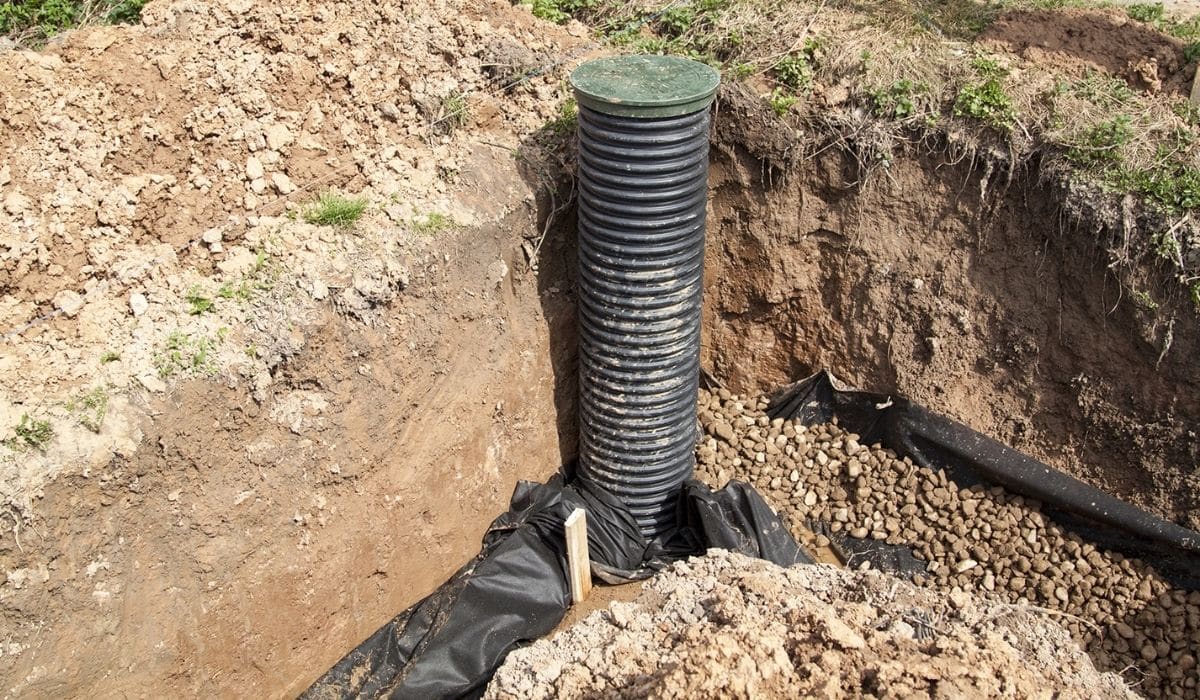
If you're comparing French drains and drain tile systems, chances are you're dealing with standing water in your yard, moisture near your foundation, or damp spots under your home.
You want to fix it, and you want to make the right call. But what's the difference, and which one addresses your problem? At Quality Foundation Repair, we've helped homeowners across Central Texas protect their foundations from water, and understanding these two drainage approaches can save you time, money, and stress.
One note up front: Quality Foundation Repair Austin focuses on foundation repair and the drainage problems that threaten your foundation, including crawl space drainage and downspout extensions. We do not install standalone French drains or basement waterproofing systems. This guide explains how both systems work so you can understand your options and how they relate to your foundation.
What Is a French Drain?
A French drain manages excess surface water that collects in your yard or around your foundation. It's a gravel-filled trench with a perforated pipe that gives water an easy path away from your home before it can cause damage. Instead of pooling, water flows into the trench, through the pipe, and drains safely away. It's a classic drainage approach, especially helpful in areas with poor grading or heavy rainfall.
Best for: standing water in your yard, water pooling around the foundation, and runoff from downspouts or slopes.
Pros: effective for surface water, requires no electricity, and helps protect landscaping and structures.
Cons: won't solve deep groundwater issues, needs a proper slope, and can clog if not filtered properly.
What Is a Drain Tile System?
A drain tile system, sometimes called a footing drain or weeping tile, is designed to keep groundwater away from your home's foundation. Despite the name, there's no actual tile involved. It's a perforated pipe laid in a trench around the base of the home, surrounded by gravel and sometimes wrapped in filter fabric to keep debris out.
According to the International Association of Certified Home Inspectors, proper installation and design of subsurface drainage systems is critical to managing water around building foundations and reducing hydrostatic pressure.
Best for: wet crawl spaces or basements, high groundwater areas, and long-term foundation protection.
Pros: very effective for groundwater, interior installs don't disturb your yard, and it works well with sump pump systems.
Cons: interior installs require breaking the floor, exterior systems involve excavation, and it doesn't handle surface water well on its own.
Interior vs. Exterior Drain Tile Systems
Drain tile can be installed outside your foundation or inside. Both do the same job; the right one depends on your home's layout, the severity of the water issue, and your budget.
Interior Drain Tile
Interior systems are installed along the inside edge of a basement or crawl space floor. This option is popular for existing homes when water is already getting inside. The pipe collects water before it spreads and directs it to a sump pump, which pushes it away from the home.
Exterior Drain Tile
Exterior systems are installed outside the foundation, usually during new construction or major renovations. They intercept water before it reaches the foundation walls, offering a strong first line of defense.
Drain Location | Best if | Benefits | Drawbacks |
Interior | Water is already getting inside, or you want to avoid tearing up your yard | Works well for existing homes and is less invasive to outdoor space | Requires breaking up part of the floor and does not stop water before it reaches the foundation |
Exterior | You're building or already planning to excavate | Stops water before it enters and protects the full foundation perimeter | Requires major excavation and can be expensive, especially for older homes |
French Drain vs. Drain Tile: Which One Fits Your Home?
Feature | French Drain | Interior Drain Tile | Exterior Drain Tile |
Best for | Surface water in your yard or near the foundation | Water entering your basement or crawl space | Preventing water from reaching the foundation |
Location | Outside, near the surface | Inside, beneath the floor perimeter | Around footing drains and exterior walls |
Drainage type | Surface water and some seepage | Groundwater and seepage | Groundwater before it enters |
Power needed | No, relies on gravity | Yes, sump pump required | Sometimes, if paired with a sump pump |
Cost and labor | Moderate, depends on yard access | Moderate to high, less disruptive to exterior | High, involves heavy digging and restoration |
Can They Work Together?
Yes, and in many cases they should. A French drain handles surface water like rain runoff and soggy spots in the yard, while a drain tile system deals with groundwater that builds up around or beneath the home and puts pressure on the foundation. Used together, one takes care of water before it sinks in, and the other catches moisture that gets deeper and could threaten your foundation.
What's the Right Choice for Your Home?
No two homes, or water problems, are alike. The right solution depends on how water is affecting your home:
- If water pools in your yard, a French drain can move it away before it reaches the foundation.
- If your crawl space or basement is damp or musty, an interior drain tile with a sump pump helps keep it dry.
- If you're building or renovating, exterior drain tile, proper grading, and downspout extensions help prevent future water issues.
- If you see cracks or uneven floors, call a foundation expert, because it could mean shifting soil that needs repair.
Each situation calls for a different approach. Where drainage is threatening your foundation, that's where Quality Foundation Repair Austin comes in.
Why Drainage Matters in Central Texas
In Central Texas, the soil and weather don't play nice with water. One week it's bone dry, and the next we're hit with heavy rain the ground can't absorb fast enough. That sudden shift puts serious pressure on your home's foundation, which is why managing water around your home is so important here.
Your Local Foundation Experts
At Quality Foundation Repair, we focus on the foundation side of water problems. We serve Austin and Central Texas, specializing in foundation repair and house leveling for slab and pier and beam foundations, along with the crawl space drainage and downspout work that protects them. We don't install standalone French drains or basement waterproofing, but during a foundation inspection we'll assess how water is affecting your foundation and point you in the right direction. Book your inspection today.