
Choosing the right underpinning method for your property is a major decision. It's all about ensuring the foundation is stable and secure for years to come.
Two methods often come up in foundation repair: steel push piers and helical piers. It helps to understand what each one is and how they differ.
One important note up front: at Quality Foundation Repair, we manufacture and install our own steel push piers in-house for slab foundations. We do not install helical piers. This guide is here to explain the difference so you understand your options and why we build our repairs around steel push piers.
What are Steel Push Piers?
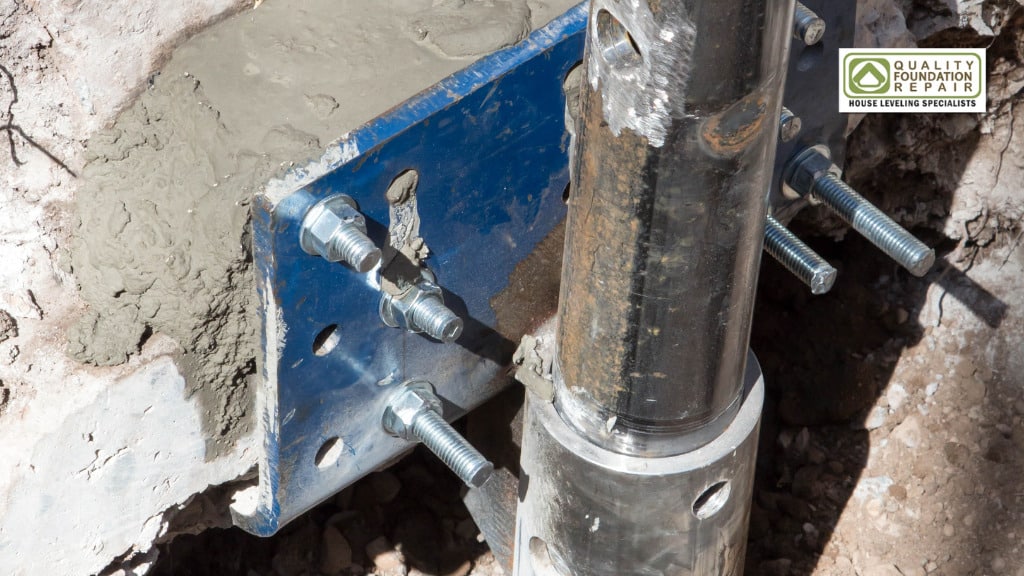
Steel push piers, sometimes called "resistance piers," are foundation repair components made from durable steel pipe sections. They stabilize structures that show signs of settling or instability, such as uneven floors or wall cracks. These problems often point to underlying issues with the soil beneath the foundation.
How do Steel Push Piers Work?
When your property's foundation begins to falter, our team drives steel push piers deep into the ground. In Austin and Central Texas, these piers bypass unstable surface soil to reach deeper, load-bearing strata.
This process shifts the weight of the building from the shifting clay soil onto the piers. As each pier is driven deeper, our crew monitors a pressure gauge on the press. A steady rise in pressure indicates the pier has reached firm bearing.
Steel push piers form a new support path by transferring the building's load down to stable soil, addressing the current signs of damage while helping prevent future movement.
How are Steel Push Piers Installed?
- Detailed foundation inspection: The process begins with a thorough foundation inspection. We assess the condition of your property and determine the most effective placement of the piers.
- Preparation: We prepare small sections of the foundation footing, carefully exposing them to minimize disruption.
- Installation: The steel piers are pressed deep into the soil with a hydraulic press until they reach firm bearing.
- Leveling: With the piers set, we use hydraulic jacks to gently lift and level the foundation to its maximum practical level without causing damage.
- Securing: After leveling, each pier is welded to the structural bracket that supports the foundation.
- Finishing touches: Finally, the soil around the foundation is returned.
What are the Advantages of Steel Push Piers?
- Depth and precision: Steel push piers can reach the depth needed to find stable support for your property.
- Minimal disruption: Installation is minimally intrusive, which means less mess to clean up.
- Long-term stability: Once installed, steel push piers provide reliable, long-term support and typically require little adjustment over time. Quality Foundation Repair Austin offers a tiered, transferable warranty based on the load-bearing pressure each pier reaches at installation.
- In-house manufactured: Because we build our own steel push piers, we control the quality of the material that goes under your home.
- Versatility: They adapt to different building structures and soil types, from homes to larger buildings.
What are Helical Piers?
Helical piers are another foundation support method used across the industry. They are long, slender galvanized steel shafts with one or more helix-shaped plates welded along their length. In design, they work somewhat like large screws that are turned into the ground.
Quality Foundation Repair Austin does not install helical piers. We include them here because homeowners researching foundation repair often compare the two, and it helps to know how they work.
How are Helical Piers Installed?
Helical piers are twisted into the ground rather than pushed. Installers attach a hydraulic torque motor that provides the force needed to advance the pier to the required depth. One reason some companies choose them is their adaptability to a range of soil conditions.
Advantages Often Cited for Helical Piers
- Load-bearing capacity: They provide support soon after installation, and the torque applied during installation helps indicate their capacity.
- Installation speed: Turning them into the ground can shorten some project timelines.
- Low site impact: Like push piers, they do not require large-scale excavation.
- Design flexibility: They can be specified for lightweight structures as well as larger developments.
Steel Push Piers vs. Helical Piers
Both methods are used for foundation repair and stabilization, but they differ in how they work. Steel push piers are driven straight down and are well suited to heavier structures that need deep support, and to areas with variable soil where reaching firm bearing matters, which is exactly the expansive clay picture across Central Texas. Helical piers are turned into the ground and are often used where surface soils are soft or loose.
For the slab foundations we repair in the Austin area, we build our work around in-house steel push piers because they match our soil conditions and let us control quality end to end.
Cost Differences
Push piers are typically less expensive than helical piers because they require less equipment and labor to install. They are driven into the ground with hydraulic pressure in a relatively straightforward process, which keeps installation quick and disruption low. Helical piers are generally more expensive, since turning them in with a hydraulic motor can be more involved, especially in difficult soil or where there are obstructions.
Need More Information? Consult a Professional
Installing foundation piers is a job for professionals. A qualified foundation repair contractor brings the equipment and experience to place each pier precisely and to address the root cause of the problem, and backs the work with a warranty.
Contact Quality Foundation Repair Today
If you think your Austin home has a foundation issue, contact Quality Foundation Repair to schedule a free evaluation and receive a repair estimate.