
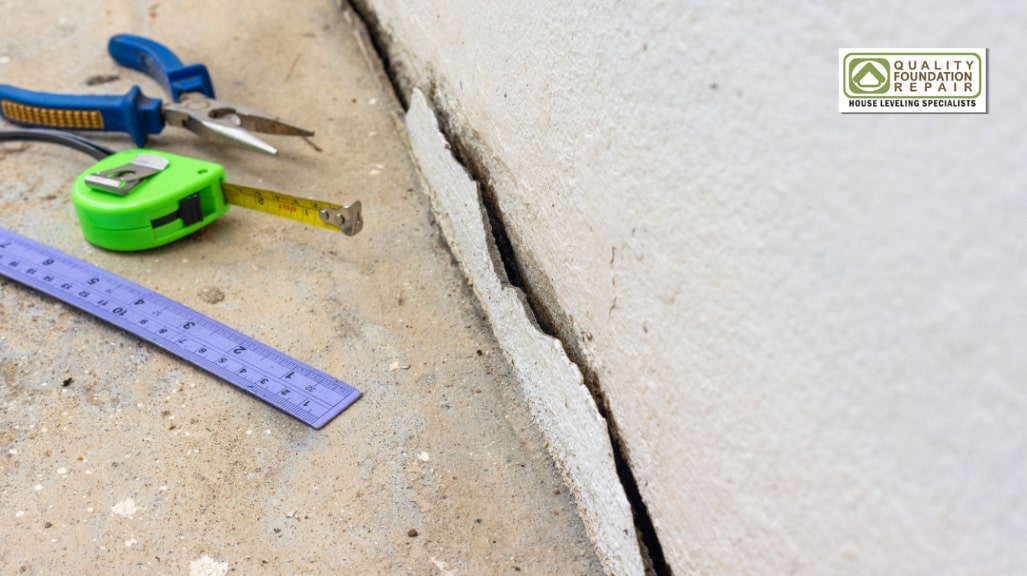
The common belief is that tree roots crack foundations by growing into them and pushing. That does happen, but it is the rare version. In Central Texas clay, a mature tree affects your foundation mostly by taking water out of the ground, and the movement that follows is a soil problem with a tree as its cause.
The distinction matters because it changes what you would do about it. Understanding the mechanism is the difference between removing a tree that was never the problem and managing one that is.
The Mechanism That Actually Matters
A mature tree moves a substantial amount of water out of the soil and into the air every day through its leaves. In a wet climate the rain keeps up. Through an Austin summer, it does not.
Blackland Prairie clay shrinks as it dries. A large tree near a house creates a zone of soil that is drier than the soil elsewhere on the lot, because the tree is actively pulling moisture out of it. That zone contracts more than the ground around it, and the part of the foundation bearing on it loses support while the rest does not.
The result is differential movement, which is the thing that damages structures. Uniform settlement is survivable. One corner dropping while the rest stays put is what opens cracks over door frames, stops doors latching, and puts a slope in a floor.
So the sequence is: tree removes water, clay shrinks, support becomes uneven, house responds. The roots never had to touch the foundation.
How Far Is Too Close
Distance from the trunk is a weaker signal than people expect. A tree draws moisture from a wide area of soil rather than only from the ground directly beneath it, so a tree that looks comfortably clear of the house can still be drying soil the house is bearing on.
Species and site both matter more than any single measurement. Austin's mature live oaks, cedar elms, and pecans are large, long lived, and draw a lot of water. Two houses the same distance from the same species can behave completely differently depending on soil depth and drainage.
Treat distance as a reason to pay attention, not as a verdict.
When Roots Do Cause Direct Damage
To be fair to the common belief, physical root damage is real, it is just narrower than people assume.
Roots follow the path of least resistance and go where the water is. They do not usually generate enough force to break sound concrete, but they will exploit something already open. A root will widen an existing crack, work into a joint, lift a walkway or a driveway slab that is thin and unreinforced, and find a drain line that is already leaking. That last one is worth knowing, because a root in a drain line and a slab leak often turn out to be the same story, and the water was there before the root was.
What roots very rarely do is push an intact residential foundation out of position.
What To Do, And What Not To
The instinct is often to remove the tree. Slow down before doing that, because removal has its own risk.
When a mature tree comes out, it stops drawing water from soil it has been drying for years. That soil then rehydrates and swells, and the ground that had contracted under one part of the house begins to lift. That upward movement can be as hard on a structure as the settlement the removal was meant to stop. If a tree is coming out near a house that has already moved, that is a decision worth making with information rather than urgency.
The more measured options look like this.
- Even out the moisture rather than removing the source. A watering routine on the affected side can offset what the tree is taking, keeping the soil closer to the rest of the lot.
- Get the drainage right first. Roof water discharging near the tree side of the house, or ground sloping toward the house, will swamp any effect the tree is having.
- Consult an arborist about the tree, and a foundation company about the foundation. These are genuinely two trades. Root pruning near a structure is arborist work with real consequences for the tree's stability, and it is not something to improvise.
- Establish whether the house has actually moved before treating the tree as the culprit. Plenty of houses stand next to large trees without ever developing a problem.
One thing to be clear about: root barriers are sometimes recommended for this situation, and they are not a service we offer. If a barrier is the right answer for your property, it is work for a specialist rather than for us, and we would rather say so than take on something outside what we do.
Reading Your Own House
The pattern worth noticing is location. Damage caused by a tree tends to concentrate on the side of the house nearest the tree, and it tends to be seasonal, worse at the end of a dry summer and partially recovering after sustained rain.
Damage spread evenly across the whole structure, or damage that does not track the seasons, is usually pointing at something else, whether that is general soil movement across the lot, drainage, or a plumbing leak feeding one area.
Neither pattern is a diagnosis on its own. They are both reasons to have someone measure it.
Where This Leaves You
A large tree near an Austin house is not automatically a problem, and it is not automatically innocent. It is a factor in how the soil around your foundation behaves, alongside drainage, plumbing, and the weather, and it is usually not the only one in play.
If the house has moved, the useful step is finding out how much and in which direction before deciding what to do about the tree. A foundation inspection answers that. Where repair is needed we stabilize and lift to the maximum practical level for that house and that soil, and we do not promise a return to original grade or guarantee a specific amount of lift.
We work across Austin and the surrounding Central Texas communities, where mature live oaks and clay soil sit side by side on most established lots. On site inspections are free for homeowners with no obligation, and real estate agents are billed for inspections separately. Contact us and we will look at the whole picture rather than only the tree.