
Expansive Soil
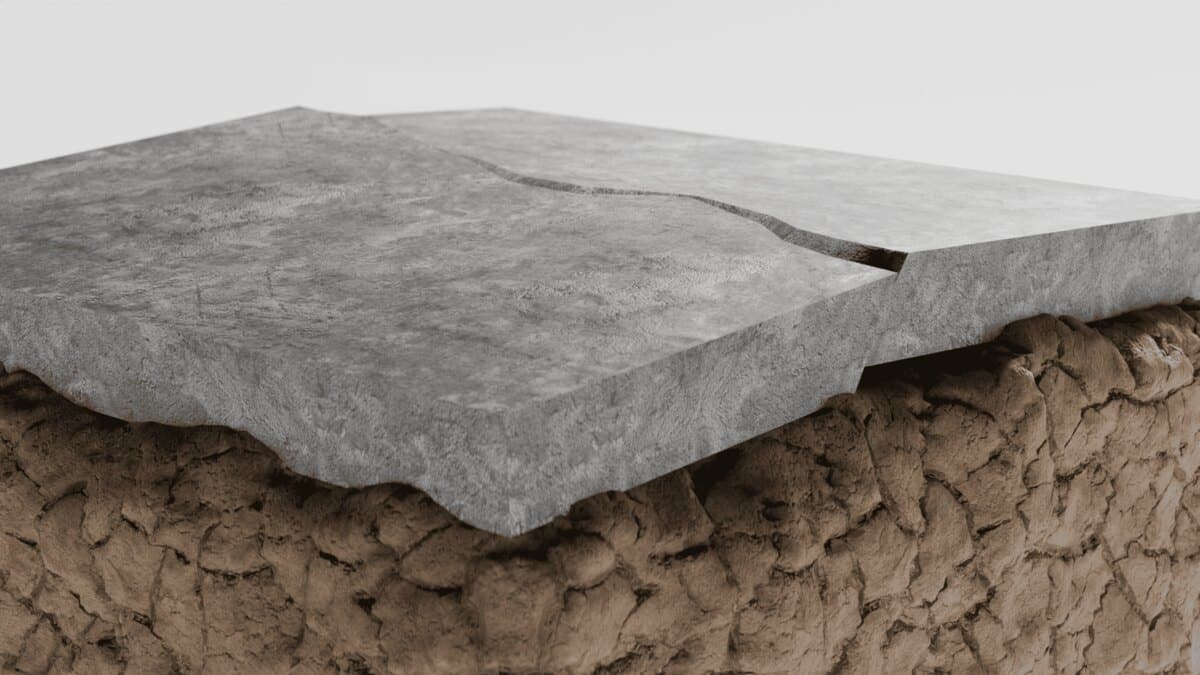
Central Texas's expansive clay soil swells when wet and shrinks when dry, the number-one cause of foundation movement in the area. It's predictable, and it's fixable.
 Locally owned & operated
Expansive Soil is one of the clearest signs Central Texas homeowners notice when a foundation is on the move. In Central Texas, the cause is usually one of two things: expansive Blackland clay swelling and shrinking under the home with every wet-dry cycle, or the moisture and drainage conditions that come with it. The specific pattern and location of what you're seeing is what tells us which one it is.
Watch for these signs it's more than cosmetic
Visible cracking in the yard or soil pulling away from the foundation during dry spells
A clear, visible sign of the soil shrinking away from what it's supporting.
Foundation symptoms that seem to track with the wet and dry seasons
Symptoms that ease up or worsen with the weather point directly at soil movement.
Multiple foundation signs appearing around the same time each year
A recurring seasonal pattern is one of the clearest fingerprints of expansive soil.
What causes this problem?
Not every instance is foundation-related, but in Central Texas, it usually is. Here's what we rule in or out on inspection.
Blackland clay composition
The clay common across Travis, Williamson, and Hays counties has an unusually high capacity to absorb and release water, swelling and shrinking as it does.
Inconsistent moisture around the foundation
Uneven watering, drainage, or shade around the home can cause the soil to swell and shrink unevenly on different sides of the foundation.
Extended drought followed by heavy rain
Central Texas's swings between long dry spells and heavy rain events intensify the soil's expansion and contraction cycle.
Check your Austin address
Type your address and we will pull two public records for that exact parcel: USDA soil data (the expansive clay behind most Central Texas foundation problems) and the FEMA flood zone. No email required to see the results.
Locating parcel...
We could not match that address to a public record
That can happen with a new build or an incomplete address. A free on-site inspection can still tell you exactly what is happening under your home.
Get a free estimateReport for
These are the public records on file for this parcel, from the USDA soil survey and the FEMA flood map. They describe the ground and the flood mapping, not the condition of your foundation. Only an on-site inspection can establish that.
This is a preliminary indicator built from public records. It does not replace an on-site inspection, only that can confirm what is actually happening under your home.
Data sources: USDA NRCS Soil Survey (SSURGO), FEMA National Flood Hazard Layer.
How QFR addresses this
Why Central Texas foundations move
Austin's expansive Blackland clay shrinks in dry summers and swells after rain, cycling in volume with every wet-dry season. Homes built directly on this clay across Travis, Williamson, and Hays counties face ongoing movement pressure, and that movement shows up in different places depending on the home. We diagnose the pattern before we recommend anything.
"Expansive soil isn't a defect in your home, it's a fact about the ground it sits on, and it's one we plan around, not one we're surprised by."

The difference is in the diagnosis
Get several quotes and you'll see a wide range of prices. The gap isn't luck, it's whether the contractor finds the actual cause and stands behind the work.
Frequently asked questions
What is expansive soil?
Clay-heavy soil that swells with moisture and shrinks in dry conditions, common across Central Texas.
How does expansive soil damage foundations?
The constant swelling and shrinking pushes and pulls on the foundation, causing cracks and settlement.
Can you build on expansive soil safely?
Yes, with proper soil evaluation and foundation planning.
Other signs to watch for
Get your free estimate
Tell us what you're seeing. An Austin specialist will reach out to schedule your on-site inspection, usually within one business day.
- Free, thorough on-site inspection
- Clear written plan and upfront price
- Warranty-backed and insured
Thanks!
Your free estimate request is in. We'll reach out, usually within one business day.
Prefer to talk now? Call usSomething went wrong
We couldn't send your request. Please call us instead, we're glad to help.
Call (737) 260-7340Found a problem?
Get a straight answer.
Free inspection, written estimate, honest triage, no pressure.