
The short answer is that steady soil moisture is what matters. What moves a house is the swing between bone dry and saturated, not dryness on its own, so the point of watering a foundation is to keep that swing small. A soaker hose set back from the slab rather than pressed against it is the usual way it is done here.
Foundation watering is one of the few things an Austin homeowner can do that genuinely affects how their house behaves. It is also one of the easiest to get wrong in a way that causes the problem it was meant to prevent. Here is what it does, what it does not do, and where the line sits.
Why Watering A Foundation Is Even A Thing Here
Most of the country does not do this. Central Texas does, because of what our soil is made of.
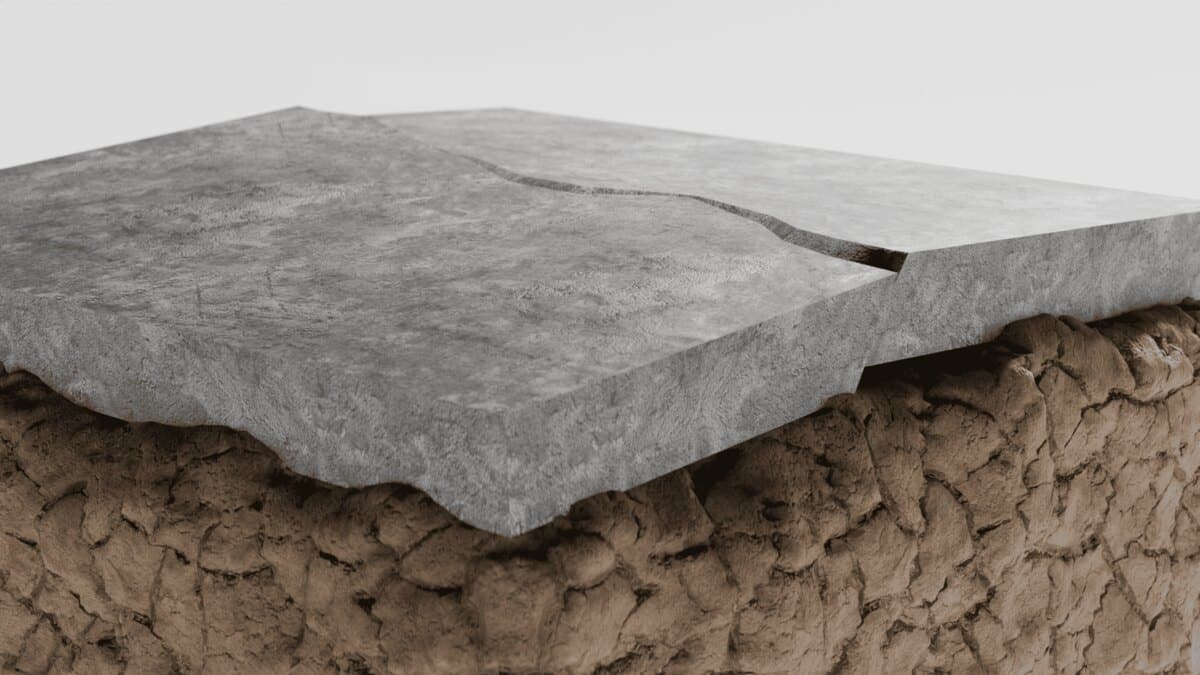
Austin sits on Blackland Prairie clay. Clay holds water, and it changes volume depending on how much it is holding. Wet clay swells and pushes up. Dry clay shrinks and pulls away. Through a normal year the soil under a slab breathes in and out a little, and the house rides it. Through a long dry summer the clay keeps contracting, and the soil at the perimeter of the house, which dries fastest because it is exposed on one side, contracts more than the soil under the middle of the slab.
That is the important part. Foundations here are not usually damaged by soil that is dry. They are damaged by soil that is dry in one place and not in another, because the house then has to span the difference. The edges drop, the middle does not, and the structure takes the strain in the form of cracks over door frames, doors that stop latching, and floors that read as sloped.
Watering is an attempt to keep that difference small. It is moisture management, not repair.
What Good Foundation Watering Looks Like
A soaker hose is the usual tool, and the usual arrangement is a loop that follows the perimeter of the house, set back from the slab edge rather than laid tight against it. Setting it back matters. Water applied directly against the slab tends to run down the face of the foundation and collect where you least want it, instead of soaking evenly into the soil the foundation is bearing on.
Beyond that, three principles do most of the work.
- Steady moisture is the goal, not volume. What you are trying to prevent is the soil swinging between saturated and bone dry, because that swing is what moves a house. How much water a given lot needs, and how often, depends on its soil and its drainage.
- Water the whole perimeter, not the side you happen to notice. Watering only the south side of a house creates a moisture difference rather than removing one, which is the same failure mode as the drought itself, just self inflicted.
- The weather changes what the soil needs. A routine that suits a dry August can be too much water during a wet week, which is where the drainage problem below starts.
Automated foundation watering systems exist and do the scheduling for you. They are a convenience rather than a different mechanism. The soil does not care whether a timer or a person turned the water on.
The Mistake That Causes Damage
Over watering is not a gentler version of watering correctly. It is a separate problem with its own consequences.
Saturated soil against a foundation does two things. It swells the clay at the perimeter, which can lift the edges of a slab rather than support them, and it keeps the ground next to the house permanently wet, which is the definition of an adverse drainage condition. That matters beyond the physics. Our warranty is void where adverse drainage conditions are present, so a homeowner who floods the perimeter every week in good faith can undo the coverage on a repair they paid for.
If you are watering, the ground should be evenly damp, not soft, not pooling, and never running toward the house. If you can see standing water against the slab, that is too much, regardless of how dry the season has been.
What Watering Will Not Do
This is where honest expectations matter more than encouragement.
Watering slows and evens out soil movement. It does not lift a foundation that has already dropped, it does not close cracks that have already opened, and it does not substitute for repair on a house that has moved past the point where soil moisture is the deciding factor. Anyone who tells you a soaker hose will bring your house back is describing something that does not happen.
It also cannot outrun a real water source working against it. If a drain line under the slab is leaking, the soil in that one area stays wet no matter what the rest of the perimeter is doing, and the difference you are trying to remove is being recreated faster than a hose can fix. That is worth ruling out before assuming a watering routine is failing. A hydrostatic plumbing test is how that gets answered.
Watering Versus Drainage, Which Are Not The Same Job
People often treat these as one topic. They pull in opposite directions.
Watering adds moisture during dry stretches to keep the soil stable. Drainage removes moisture during wet stretches so it does not collect against the house. A property needs both to be working, and a property doing only one of them well tends to have problems on the season the other one was supposed to cover.
The practical version: keep the ground sloping away from the house, keep roof water discharging away from the foundation rather than beside it, and then use watering to fill the gap when the sky stops helping. Grading and gutters are ordinary maintenance, and they are worth doing whether or not you ever water a foundation.
When Watering Is No Longer The Question
Watering is a maintenance habit for a house that is behaving. It is not a diagnosis.
If doors have stopped latching, if cracks are widening rather than staying put, if a floor has taken on a slope you can feel walking across it, the useful question is no longer how often to run the hose. It is what has moved, how far, and why. Movement driven by expansive soil is the most common answer in this area, and where the soil itself is the ongoing problem, soil stabilization addresses the ground rather than only the symptoms above it.
When a house does need work, we stabilize and lift to the maximum practical level for that structure and that soil. We do not promise a return to original grade, and we do not guarantee a specific amount of lift.
The Honest Summary
Foundation watering is simple to do, it is genuinely useful in Central Texas clay, and it is worth doing through a dry summer. It is also frequently oversold. It keeps a stable house stable. It does not rescue one that has already moved, and done carelessly it creates the drainage condition that causes damage and voids coverage.
If you are not sure which situation your house is in, that is a reasonable thing to have looked at rather than guessed. On site inspections are free for homeowners with no obligation, and real estate agents are billed for inspections separately. Contact us and we will take a look at the soil, the drainage, and the house together, because in this part of Texas those are one question.